
America@250: Was gibt es zu feiern?
Am 4. Juli 2026 werden die USA das sogenannte „Semiquincentennial“, den 250. Jahrestag der amerikanischen Unabhängigkeit begehen. Angesichts der polarisierten innen- wie außenpolitischen Wahrnehmung der amerikanischen Geschichte, Politik und heutigen kulturellen Wirklichkeit in den USA ist es eine Herausforderung, als Institut für Anglistik/Amerikanistik im universitären und örtlichen öffentlichen Diskurs ein komplexes und nuanciertes Bild der wegweisenden Ereignisse um die amerikanische Unabhängigkeit 1776 und danach zu zeichnen.
10 Studierende des B.A. Anglistik/Amerikanistik Studienganges stellen sich nun im Rahmen des projektorientierten Moduls „Applied Studies of English“ dieser Herausforderung und planen ein vielfältiges interaktives Event im Rahmen des Independence Day 2026, welches versuchen wird, die demokratischen Errungenschaften der USA im historischen Kontext zu beleuchten und zu honorieren, aber auch kritische Reflektionen und Gespräche zu ermöglichen. Das Event „America @ 250: What’s to celebrate?“ soll - so hoffen wir als Organisator*innen - dabei eine Brücke zwischen den Greifswalder Studierenden und den interessierten Greifswaldern und ihren Gästen schlagen.

PROGRAMM
UNLOCK AMERICA's INDEPENDENCE
Der amerikanische Unabhängigkeitsprozess ist ein zentrales historisches Thema, das oft abstrakt und faktenorientiert vermittelt wird. Der Mini-Escape Room und der Trail of Independence bieten unseren Besuchern unkonventionelle Einblicke in die amerikanische Unabhängigkeitsgeschichte. Der Trail of Independence legt Wert darauf, Ereignisse der damaligen Zeit relevant für aktuelle Themen zu machen und beispielsweise die Rolle von Bevölkerungsgruppen, die in der traditionellen Geschichtsschreibung marginalisiert wurden, in der Unabhängigkeitsbewegung zu beleuchten. Im Mini-Escape Room erleben die Teilnehmenden den Weg zur amerikanischen Unabhängigkeit als interaktives Rätsel. In kleinen Aufgaben treffen sie Entscheidungen, um gemeinsam die Declaration of Independence freizuschalten. (LK, FS)
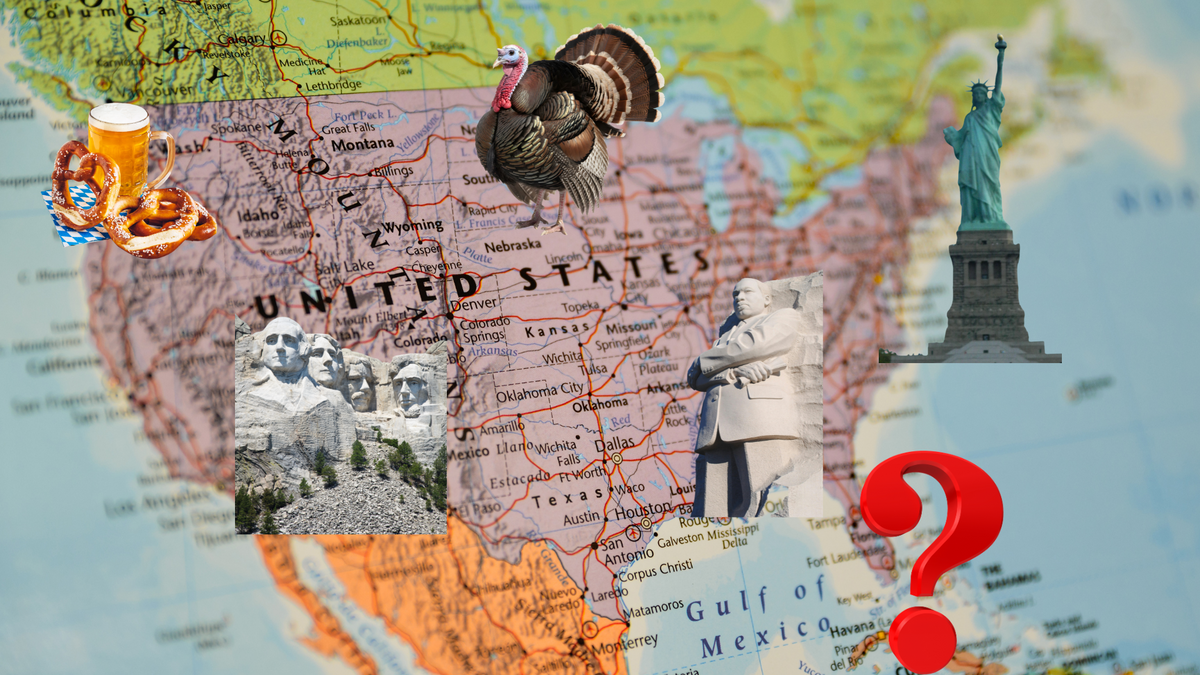
MAPPING AMERICA
Think of how you always roll your eyes at Americans who seem to know so little about geography. Do you know American geography better? Let's find out.
We have selected some intriguing celebrations as well as fascinating American landmarks. From Coachella to the Jumping Frog Jubilee to Kwanzaa. From the Grand Canyon to Mount Rushmore: Learn about them and put them on the map. Literally.
This is your time to shine. (AH, CD)
WALK OF FRAME
Ob Musik, Sport, oder Film - ein Großteil der Popkultur, die wir konsumieren, stammt aus den USA. Unser Walk of Fame feiert die kulturellen Einflüsse der Vereinigten Staaten weltweit.
Bei diesem öffentlichen Event habt ihr die Möglichkeit, einen eigenen Stern für unseren Walk of Fame im E.-Lohmeyer-Platz 6 zu beschriften und somit selbst zu entscheiden, welche Amerikaner oder Amerikanerinnen es verdienen, in den Kategorien Film, Musik und Sport gewürdigt zu werden. (OG, KE, MB)
Winter Float at ELP 3 (near room 1.30)
Can you identify the ethnic celebrations represented by their typical elements exhibited in the display?
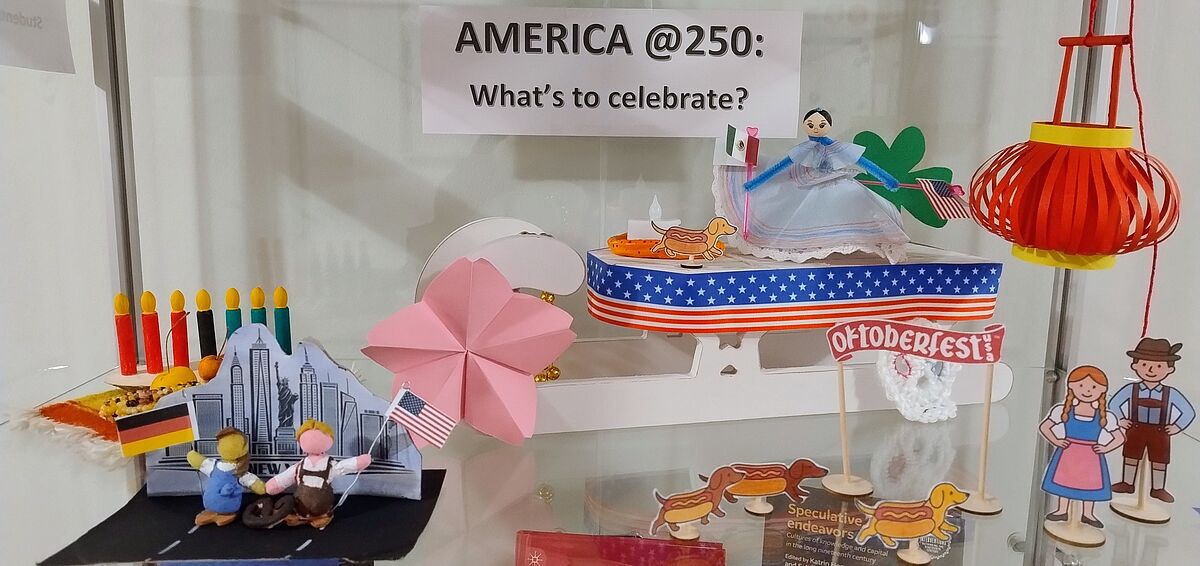
Cherry Blossom Festival
In 1912, then mayor of Tokyo Yukio Ozaki gifted 3,000 cherry trees to the city of Washington, DC. Every year from mid-March to early April, the pink blossoms draws millions of visitors to the US capital to celebrate the transient beauty of life and Japanese culture.
Chinese New Year
Celebrating the beginning of the lunar new year in January and/or February, Chinese Americans hang red lanterns throughout Chinatowns. Firecrackers and traditional performances featuring dancers in dragon costumes are also part of the 15-day long festivities. (Mina)
Cinco de Mayo
Originally celebrated to mark the victory of Mexicans over French troops in Puebla in May 1862, Cinco de Mayo has become a celebration of Mexican-American communities and their culture across the USA. The festivities feature mariachi bands and dancers in traditional attires. Female dancers are especially stunning in their colorful, flowing dresses. (Kira)
Dià des los Muertos
Skulls in all sizes, colors, often painted with flowers, and even baked or as sweets arestaples of the Day of the Dead celebrations on November 1 and 2 of each year. The festivities are rooted in indigenous and Spanish traditions in North America and were revived as part of the Chicano movement in the 1970s. (Finja)
Diwali
Americans of Indian descent light “Diyas”, a small oil lamp traditionally made of clay, on Diwali, the Hindu feast of light, in November of each year. The celebration marks the triumph of light over darkness and good over evil, welcoming prosperity and inner enlightenment. (Leonie)
German-American Steuben Parade
In September 1957 German immigrants and German-Americans who wanted to keep the traditions of their homeland alive organized the Steuben Parade in New York City. The parade is named in honor of the Prussian officer Friedrich Wilhelm von Steuben (1730-1794) who famously introduced rigorous military discipline to the Continental Army under General George Washington during the American War of Independence.
Kwanzaa
Created in 1966 by Maulana Karenga as a pan-African first-fruit celebration in America, Kwanzaa is observed from December 26 to January 1 by lighting one new candle per day. Each candle represents distinct values of African Americans such as Unity (umoja) and Faith (imani). Furthermore, the red candles represent the bloodshed in the past, the green candles the earth, and the black candle – lit on the last day of Kwanzaa – the African people. (AB)
Mardi Gras
Mardi Gras (Day) refers to the final day of the carnival season in February of March of each year, which is originally tied to the French Catholic tradition of fasting before Lent. In New Orleans this ethnic celebration has incorporated indigenous, African, Caribbean, and Creole traditions. The colored beads given away from participants in the parades represent justice (purple) and power (gold). (Anne)
Oktoberfest
While honoring the Bavarian roots of the German Oktoberfest with Bratwurst, beer, and traditional clothing like Lederhosen and Dirndl, the celebration has been adapted to American festival culture by including competitions such as “the Running of the Wiener” in which Dachshunds in hot dog costumes race for fun and fame. (Celina)
Saint Patrick’s Day
According to legends, Ireland’s most famous saint, St. Patrick, brought Christianity to the Irish in the 5th century when he taught the concept of the Holy Trinity with the help of the 3-leaf shamrock. Irish Americans remember the saint on March 17 every year and on that day, a majority of Americans celebrate along them with beer and an abundance of green everywhere. (Olivia)